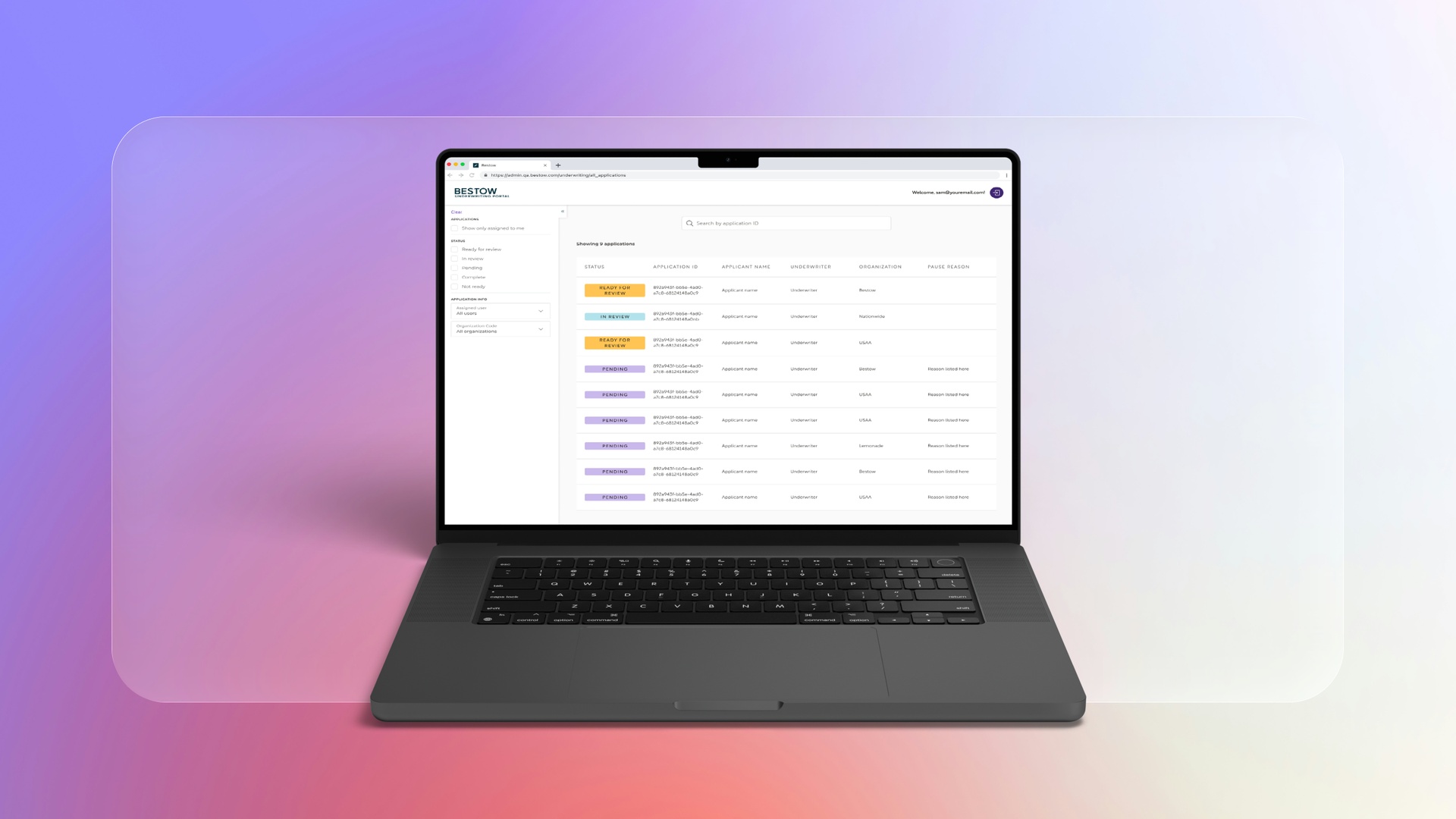
The Problem
At Bestow, the underwriters and customer service representatives who keep life insurance policies moving were working across three separate portals, logging in and out an average of ten times a day. The fragmentation cost each user roughly 30 extra minutes daily, which added up to about 250 hours wasted every month across the team. Beyond lost time, the constant context-switching created confusion, disrupted workflows, and made it harder to serve customers quickly.
For the business, the stakes were just as real: lower productivity, higher operational costs, slower customer responses, and a system that couldn't scale as the company grew. Internally, the project even earned a nickname: “One” Portal To Rule Them All. The goal was clear: one unified portal that eliminated multiple logins, cut navigation time, and streamlined access to every essential tool.
Discovery
I ran a comprehensive discovery phase to understand exactly where the friction lived and how much it was costing:
- Stakeholder interviews with 12 users (8 underwriters and 4 customer service reps) found that 70% of underwriters spent an average of 45 minutes a day just logging in and out of portals, and 60% of customer service calls required information from multiple systems.
- User surveys sent to 100 people across the organization (75% response rate) showed 80% were frustrated by portal-switching, and 65% wanted a single integrated system with an intuitive dashboard and advanced search.
- Usability testing with 15 representative users revealed that 55% struggled to navigate between portals without assistance, and tasks took 25% longer than expected due to unclear navigation and redundant workflows.
- Competitive analysis of 5 comparable systems showed that single sign-on alone cut login times by 50% for competitors.
- Personas (an underwriter, a customer service rep, and a manager) kept the diverse needs of each role front and center through design.
All of it converged on a clear problem statement:
Users are burdened by the inefficiency of managing three separate portals, leading to wasted time and increased frustration, which impacts productivity and user satisfaction. Data shows a potential for a 40% increase in operational efficiency by consolidating these systems.
The Solution
From cross-functional brainstorming and affinity mapping through wireframes, user stories, and mid-fidelity Figma prototypes, I shaped the ideas into a prioritized roadmap (using MoSCoW to separate must-haves from nice-to-haves) and validated it with stakeholders before development. The unified portal was built around:
The full One Portal To Rule Them All brainstorming board, live from FigJam.
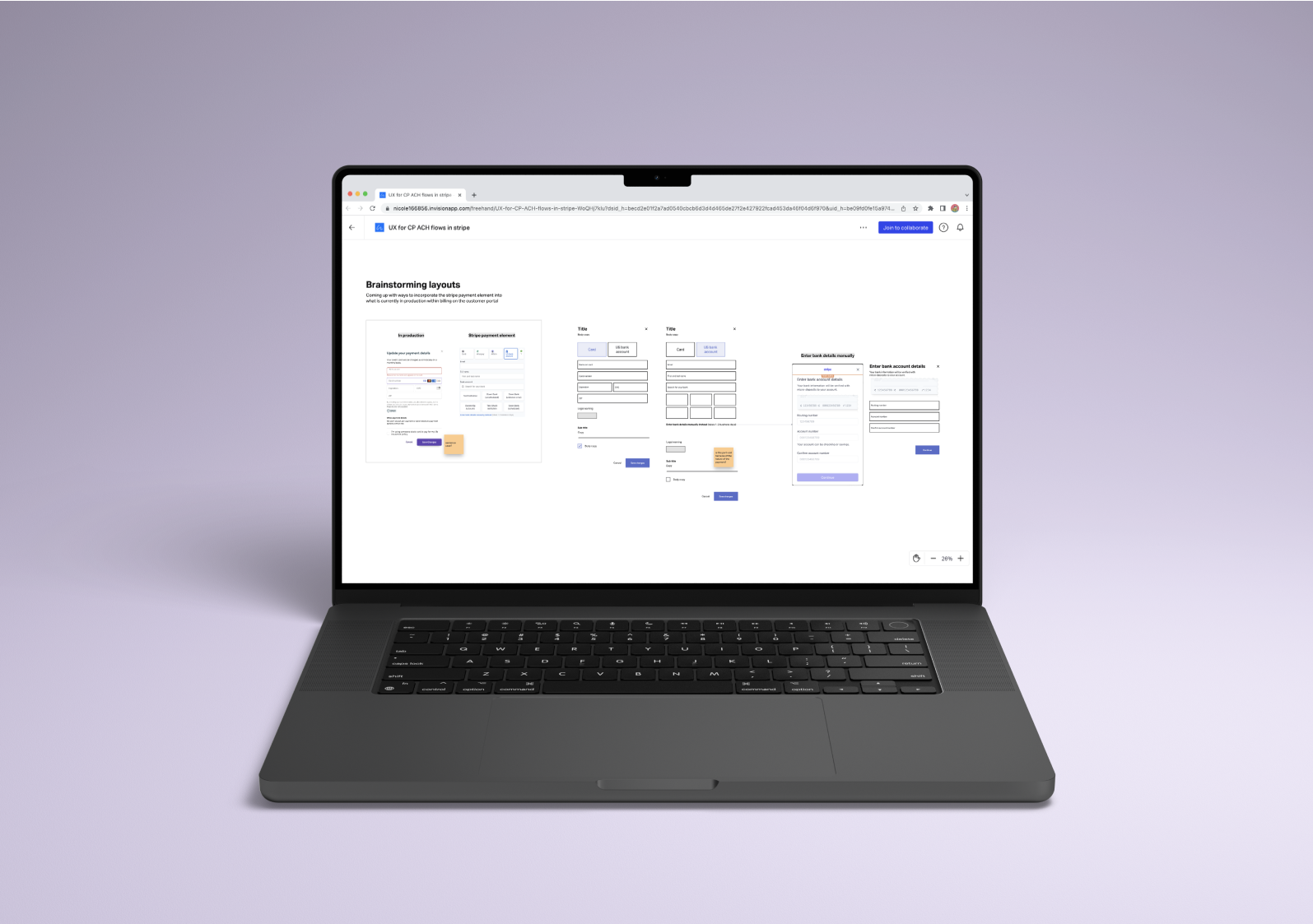
Brainstorming layouts: exploring how the Stripe payment element could fit into the existing billing experience.
Stepping back to the information architecture: one search and one record view across all three legacy systems, with contextual help where decisions happen.
The locked wireframe from my Claude Design file: nav rail, cross-system record list, and the assistant baked into the record view.
- Single sign-on. One set of credentials unlocks every tool. No more juggling three logins and the frustration that came with them.
- A centralized, role-aware dashboard. Key metrics, notifications, and tasks tailored to each role, with quick access to underwriting guidelines, customer inquiries, and internal communications.
- Integrated communication tools. Chat and messaging built directly into the portal, so underwriters and customer service reps can resolve issues together in real time.
- Responsive, supported rollout. A fully responsive design that works across desktop, tablet, and mobile, paired with video tutorials, user manuals, and a dedicated help center to make adoption smooth.
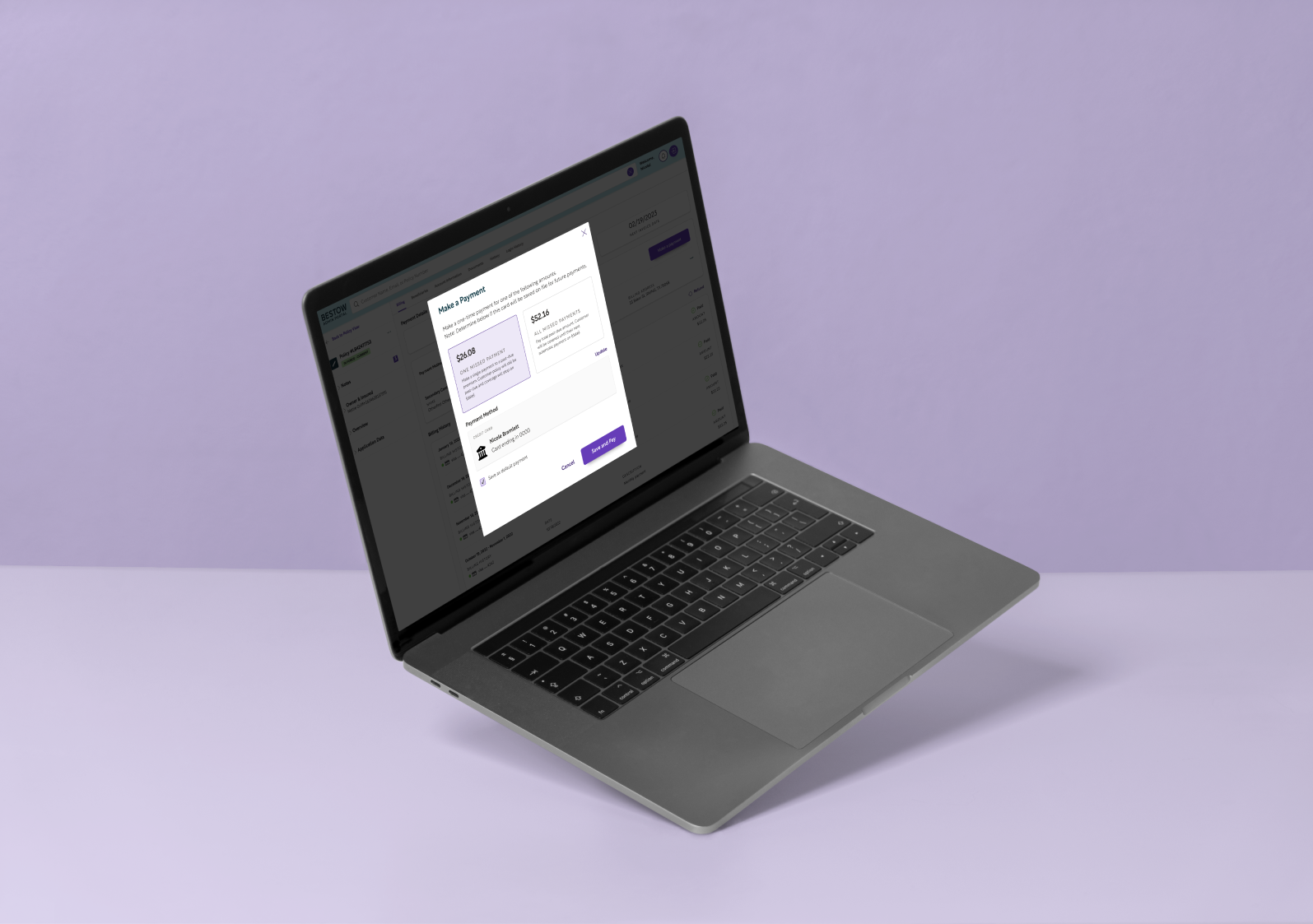
The shipped Make a Payment flow: settle one missed payment or all of them, with a saved payment method.
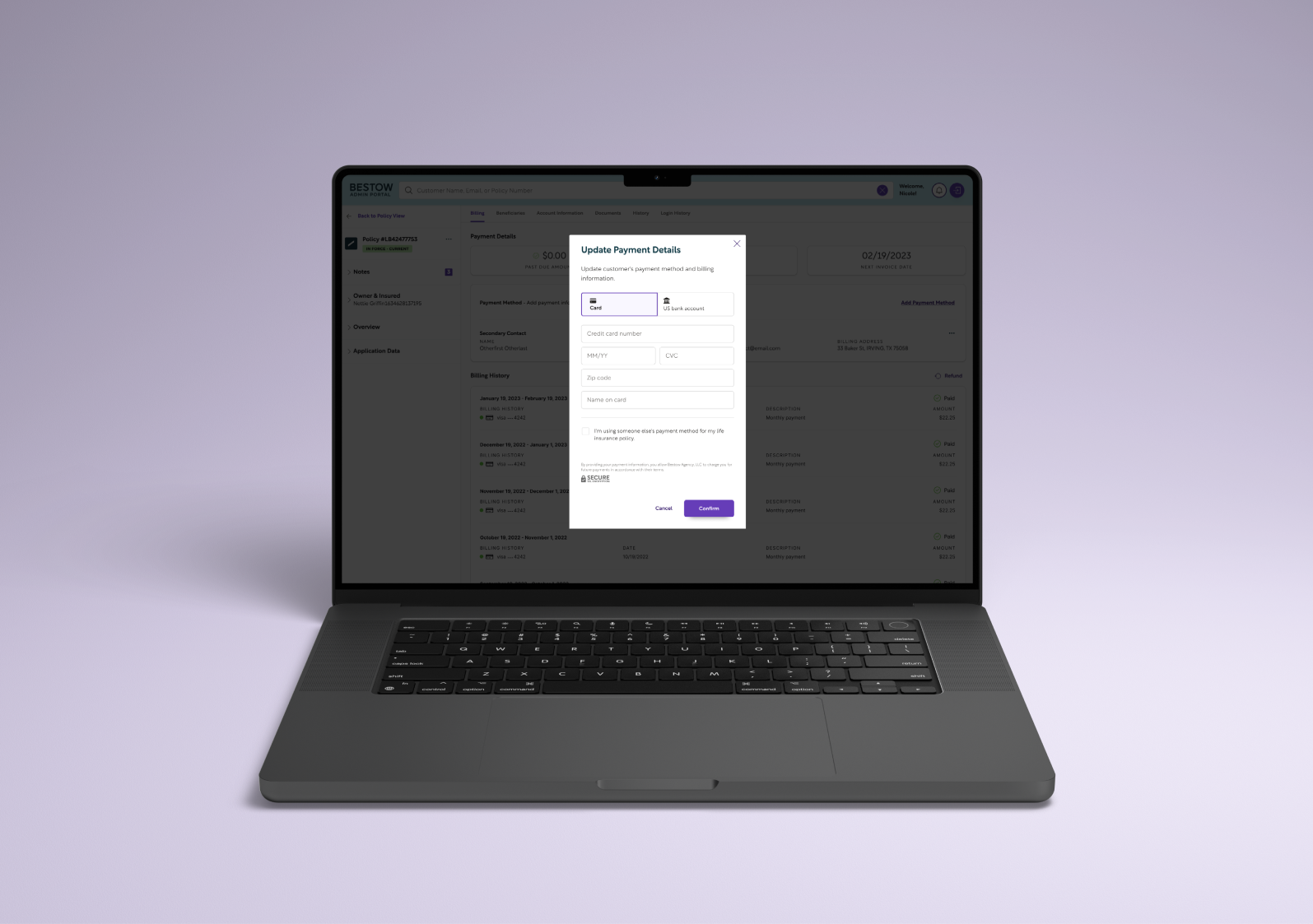
Updating payment details happens in place, without ever leaving the policy view.
Ways of Working 2023: how the cross-functional team aligned while building the portal.
The Impact
Post-launch performance analysis confirmed a 40% increase in operational efficiency: users spent dramatically less time navigating systems and more time on the work that matters. Follow-up surveys showed a marked improvement in user satisfaction and reduced day-to-day friction, and the integrated communication tools led to better collaboration between teams and faster issue resolution for customers.
The retrospective closed the loop: we documented lessons learned, gathered stakeholder feedback on organizational impact, and built a prioritized roadmap of future enhancements, from additional integrations to improved reporting tools, so the portal keeps getting better.
Want to dig into the full discovery research or the design process behind this project? Get in touch.